Soaking in volcanic hot springs while watching hummingbirds and butterflies is a great way to relax. Fuentes Georginas is a ‘must do’ for any romantic or nature lover out there!
The bus stop in Zunil with volcano in the distance.
From Quetzaltenango we caught a bus for 7 quetzales ($1.00 US) each which brought us to Zunil. Then we got a camionetta (a pickup truck/taxi where you ride standing up in the back and there are metal bars to hold onto) for 25 quetzales each for the final 5 mile stretch up the steep valley to the hot springs.
Ian is ready for the ride up the hill in this camionetta.
You pay 60 quetzales ($7 US) to enter the site and get your ticket. Then we asked to rent a cabana for the night. We checked out 3 cabanas before we picked number 7. Number 1 was right next to reception and the restaurant (noisy) and smelled musty. Number 5 smelled like a porta potty. We picked number 7 because it just smelled like a fireplace (how romantic!). It wasn’t available until later so we carried our bags to the main pool and changed into our bathing suits in the changing/bathrooms. We felt secure leaving our bags on a bench within sight although lockers are available.
The main pool at the resort.
We soaked in the green hot spring water until we got hungry and then dried off with our sarongs (best universal pack item), grabbed our bags and walked back to the restaurant area at the front because the main restaurant next to the big pool is under renovation.
The lower, hotter pool near the entrance.
After an OK lunch with decent margaritas we checked into our private cabana. On Mondays the main pool is closed at 4 to drain and refill it. So we walked down to the smaller but hotter hot spring that is at the entrance to the resort.
Dinner with a view.
We had dinner at the resort with a great view of the volcano. Sunset was amazing as clouds poured into the valley, billowing into shapes and making the volcano disappear and reappear.
Enjoying the fireplace in our private cabana.
Trouble in Paradise! That night Ian happily made our fire and lit candles to enjoy the ambiance. The wood was a bit green but he got it going. After some time passed smoke started rolling into the room. We’re pretty sure the chimney needs cleaning. We ended up opening the windows and doors and letting the smoke clear out. We enjoyed it while it lasted!
The main pool on Tuesday morning after being drained!
Main street in Todos Santos where the local men hang out to people watch.
Always be Respectful
Todos Santos is a traditional indigenous village in the mountains at 8,000 feet. The local language is ‘Mam’ from the ancient Mayans but they also speak Spanish. We learned how to say ”How are you?” in Mam and most people seemed delighted. In the year 2000 a Japanese man and his Guatemalan bus driver were killed by an angry mob when visiting tourists where taking photos in the market. The locals believed they were there to steal children. We took extra care to be respectful!
The mountains are often shrouded in clouds at this elevation.
Cool Clothes
Both the men and women wear traditional dress. This is one of the only remaining villages in Guatemala were the men still have traditional clothing. The men all wear red and white striped pants with a mostly white stripped shirt with cuffs and collars made of individual hand woven colorful patterns. The women wear multi colored dresses set on a black background and beautiful fringed aprons.
Great examples of the local Mayan garb.
Got Spooked, but Luckily We Stayed
Our first night we wandered around until we got spooked by some drunks that followed us like zombies. Not many tourists have been through these parts lately and we were the ONLY foreigners in town. But the next day we had a great time getting to know locals that wanted to have a drink with us, or wanted to take our picture, or were just curious about who we are and where we came from.
Locals were curious about us and happy to chat. Luckily Ian speaks Spanish, because learning Mam was pretty tricky!
Fun at Funky Museum
We visited a museum that was actually a family’s home and farm with a very small, dark and musty smelling collection of items. Some ranged from 2,000 years old! Our guide played some marimba music for us and sold Ian one of his shirts for a good price.
Our museum guide and creator of the museum, Fortunato, playing us a sample of marimba music.A photo showing the famous yearly horse race in Todos Santos. A younger Fortunato is on the far left, center.Ian, Fortunato and I in front of Museum Balam.
Very Small Ruins
A relatively short hike up and out of town leads to some ancient Mayan ruins which are mostly covered by earth and grass. On the way we stopped and chatted with a sheep herder boy with his sheep in a field of corn. We didn’t take his picture.
At the top of the ruins the locals still practice some pagan rituals.
Bustling Market Day on Saturday
Saturday is market day, so we woke at 7 AM to the busy sounds of villagers selling and buying everything from shoes to live turkeys. We bought an individual sheet of Ibuprofen from a lady with a whole table of pills and medicines which had been dumped out of their boxes. People come from all the neighboring villages to sell and buy on market day.
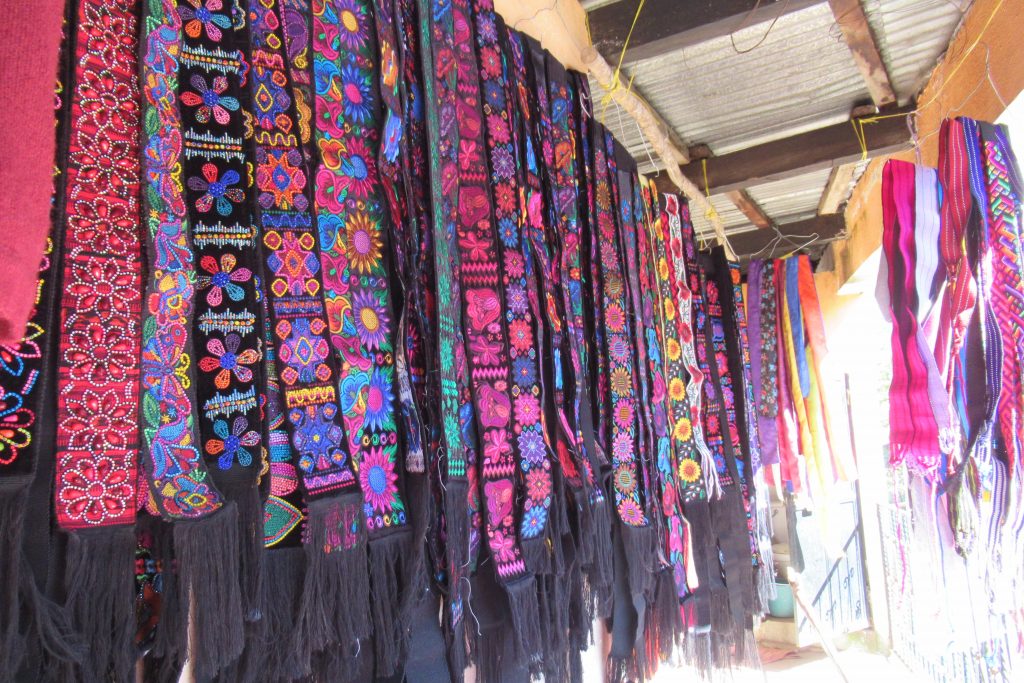
Vibrant hand stitched belts sold in the market.
Travel Tip: there are no colectivos or buses in Todos Santos on Sunday so plan accordingly. We had planned to leave on Sunday by colectivo but after waiting around a bit and asking questions we had to pay 125 quetzales for a taxi to take us up the dirt road half an hour to the main highway in order to flag down a colectivo (10 quetzales each) to Huehuetenango an hour away. You can see the price difference between taxis and local transportation!
Cascada El Chiflon Eco Park is located in Chiapas, Mexico.
From San Cristobal de las Cases we took a couple collectivos and a moto (the Mexican version of a tuk tuk or rickshaw) to El Chiflon Eco Park. The park had already closed at 5 when we arrived around 5:30 PM but they opened the gate to let our moto through and there was a man who rented us a cabana for 600 pesos ($30 US). The restaurant was closed so we dropped off our bags and had him call us another moto back out of the park to eat.
View from the window in our cabana, right next to the river!
We set our alarm the next morning for 8:00 and had breakfast at the park’s onsite restaurant . We had the reception desk hold our bags and checked out then headed up the trail. Entrance was 25 pesos each. We stopped every chance we got to photograph the gorgeous opaque turquoise water.
Cascada El Suspiro, one of FIVE waterfalls to see in the park.Incredibly gorgeous turquoise water!
There are five falls, each one beautiful. There are three zip lines, each one a different length and price if you want to zipline down. Be prepared for all the stone steps and very steep incline especially to see the top 2 waterfalls. Go early to beat the heat and most of the climb will be in the shade.
Ian ascends some steep, slippery steps. Beware of mist getting on your camera!
We made it all the way to the top and almost back to the entrance by 1:30 when we stopped for a much needed beer. After that we enjoyed swimming in the cold refreshing aqua pools below the falls.
We enjoyed swimming in this magical place after our hike up the mountain.This iguana was 6 to 7 feet long! Huge beastie!
We had lunch at the park restaurant where we saw iguanas and white throated magpie jays (see a pic of the magpie jay in my blog ‘Beautiful Beaches of Oaxaca Mexico’). Back on a collectivo headed to Comitan to spend the night before crossing the Guatemala border!
In the state of Chiapas in the south of Mexico is a delightful city that is a blend of Indigenous culture and modern sophistication. San Cristobal de las Casas offers plenty of International restaurants as well as local fare, wine bars, and even free tapas with your drink. Meanwhile there are colorful Indigenous locals weaving clothes in the shade and selling their wares both in the market and walking right up to you on the street.
There are many pedestrian streets with outside seating.
Here are four things to do besides people watching while sipping wine or pox (the local corn liquor).
Explore Caves at Rio Arcotete
Take a taxi to Rio Arcotete just outside of town to the East. It should cost 100 pesos. Our driver tried to tell us it was 100 per person but we knew better and refused. It was only 100 on the return trip with a different driver.
Beautiful Rio Arcotete
Take a walk down to the river for a great photo opp and check out the cool cave you can explore.
Inside the caves at Rio Arcotete.
Ride a Horse to an Indigenous Village
You can book a horseback ride to the indigenous village of San Juan Chamula from the tour companies all over the town center, but we got one through a hotel for just 250 pesos. It was a 3 hour deal with a 15 minute cab ride that dropped us off where the horses were waiting.
The first part of the ride was mostly through the forest and lasted about 45 minutes.
Then we arrived at the village and watched a procession leaving the church with guitar players, bottle rockets going off, and everyone in traditional dress. After that we paid 25 pesos each to enter the church and see the pine needle covered floor, statues of saints lining the walls and families gathered around hundreds of candles in rows praying. No cameras are allowed in the church.
The procession out of the church led by guitar players and someone setting off fireworks.
Take a Hike and See Beautiful Orchids
Take a taxi out to Orquideas Moxviquil, a botanical garden with lots of orchids and a mile and a half hike in the woods to a small cave.
This flower is becoming extinct because of its use in local pagan rituals. There were many different types of orchids in greenhouses on site.
Take a Boat Ride Through a Canyon
Don’t miss a day trip to Sumidero Canyon for 340 pesos per person with https://jalapeno.tours. The speed boat ride through the steep limestone canyon is fantastic and you’ll see crocodiles, spider monkeys and tons of different birds.
Dramatic canyon walls in Sumidero Canyon.Spider monkey in the trees in Sumidero Canyon.
We enjoyed San Cristobal so much that we extended our stay. It would be easy to spend months exploring this town and its surroundings!
At the north west end of Puerto Escondido is this gem of a beach: Playa Carrizalillo.
We rented a car for $60 US a day for 3 days (including insurance and a one way drop off fee) and drove from Oaxaca city over the mountain pass to the Oaxacan coast. You can do it in a day but it’s a bit gruelling so we broke up the trip with a night in San Jose del Pacifico. A super twisty road but gorgeous views of cloud frosted valleys below was very rewarding.
View from our cabana in San Jose del Pacifico.
We stayed in mellow, hippie vibe Mazunte for a couple nights before driving to Puerto Escondido to return the car.
Street art in Mazunte. Bone marrow appetizer in Puerto Escondido.Sunset in Puerto Escondido.
There are several small cove beaches and one very long beach to explore in Puerto Escondido. We stayed in a small apartment with a pool at the quieter north west end and had the choice of walking to beaches, restaurants and bars or taking a taxi to the long, busier beach.
Playa Manzanillo (within walking distance of our place) was a great place to sit in the shade of an umbrella restaurant and drink pina coladas.
Then we took a two hour air conditioned taxi back down the coast to our new favorite beach spot, Huatulco. We made ‘home base’ the town of La Crucecita and rented a scooter for 8 days so we could explore all the bays we could possibly drive to. Parque Nacional Huatulco prevents you from driving to every bay but a snorkel charter can get you there.
White throated magpie jays are common in the jungle of Huatulco.
There are 9 bays and over 30 beaches to explore in Huatulco with clear waters and tropical fish. Since we travel light we don’t pack actual snorkel gear. We just have one pair of goggles that we share and we know how to float!
Xquenda Huatulco Spa, where we stayed for Ian’s birthday.Playa Entrega became one of our favorite beaches with calm water and good snorkeling.San Augustine had some of the best snorkeling and gorgeous water.Playa Cacaluta is a tropical dream come true. Bring water because there’s nothing out there except you!
After plenty of sunshine, sunscreen, cervezas, micheladas, margaritas, too much food and a flat tire on our scooter it was time to head back to the mountains! We bought tickets at $37 US pp for an eight hour overnight bus to San Cristobal de las Casas in the state of Chiapas. Woo hoo!
Churches in Oaxaca are like Starbucks in Seattle. There’s one on every corner. I spotted six while sipping a smoky tasting mezcal margarita on a rooftop bar overlooking Templo de Santo Domingo Guzman. Each church has its own unique color scheme, adding to the overall charm of Oaxaca. We found Oaxaca to have a mellow vibe with sweet, helpful people even though it’s a city of over 300,000 souls.
The Anador is a pedestrian only street in Oaxaca city.
Oaxaca is famous for several things including cheese, chocolate, mezcal and seven different moles. The most complex mole is negro mole with up to 27 ingredients and takes half a day or more to make a batch.
A sampling of the seven moles of Oaxaca.Negro mole for dinner on the plaza.
A half hour bus ride for 80 pesos ($4 US) takes you to Monte Alban. A World Heritage site that was the capital of the Zapotec civilization where you can walk among pyramids, tombs, temples and ball courts over 2,500 years old.
Due to Covid only a few hundred visitors are allowed each day. Get there early!The carvings on the blocks depict sacrificial captives and calendar information.A ball court. Unlike other ball courts in South America it appears the winners of the game weren’t sacrificed at this site.
Another fun day adventure was taking a colectivo out to a mezcal farm for 80 pesos ($4 US). It was a 45 minute drive out to the semi-desert country. We had to pass through a Covid checkpoint where our temperature was taken, we had to get out of the car and the car handles were sprayed with disinfectant and our hands were cleaned with sanitizer.
At the mezcal farm we learned there are hundreds of types of agave but mezcal is typically made from 12 varieties. You can buy a bottle made from a single varietal or blends, similar to wine. Tequila is made from one type of agave only, the Weber Blue agave. For mezcal it takes 7 to 15 years depending on the species for the plant to mature and form a pina at the heart. The pina is charred then chopped up and crushed by a stone wheel pulled by a horse to create a mash. We tasted this mash and it was sweet, similar to sugar cane.
The distillation process at the mezcal farm.
Then the mash was cooked in copper kettles over a wood fire to distill it, then distilled a second time. The mezcal can be consumed in one month or aged up to 4 years. After our tour we had the pleasure of tasting at least a dozen single plant and blended mezcals.
Mezcal tastes were served with orange slices dipped in three choices of salt: dried crushed maggots and salt, hibiscus flowers and salt or dried crushed grasshoppers and chili with salt (those three little black dishes).
After our stay in Oaxaca city we rented a car and drove the gnarly twisting road towards the coast and our destination of Mazunte. Half way to the coast we stopped and spent the night in San Jose del Pacifico at 8,000 feet and saw this gorgeous sunset! That night we enjoyed a wood fire in a private cabin while dreaming of the beach…..our next destination.
Lavender clouds billowing below in the valley as the sky burned vermilion!
Sayulita is a small surf town located 20 miles north of Puerto Vallarta.
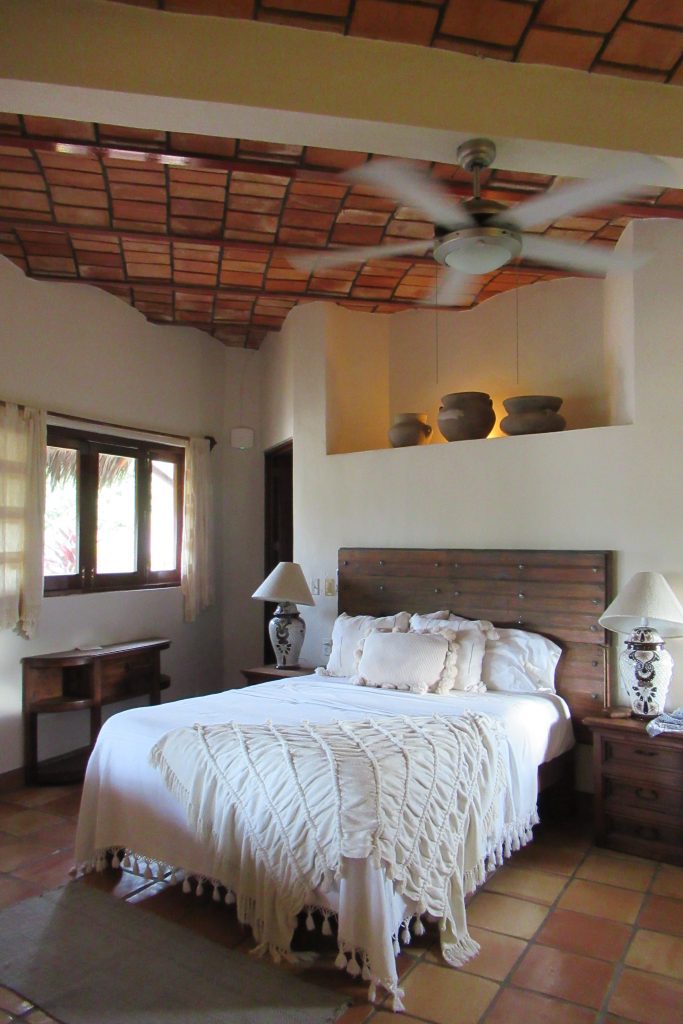
Morning breaks with a cacophony of sound. Flocks of green parrots screech as they fly from tree to tree. Roosters compete for loudest morning greeting. Chachalaca birds cackle and a small dog barks. The Sonic propane truck plays its cheery song. Quietly the air conditioner hums beneath it all at a comfortable 22′ C. I open my eyes to see the burnt orange tiles of the arched ceiling above me. Some of the bricks are crumbling from water damage and little piles of dust have accumulated on the floor in the night. Turning my head I see the lavender sky brightening to light blue through the shaggy palapa roof of our rooftop penthouse airbnb. Soon the clanging and banging sounds of construction will begin next door with the tinny sounds of Mexican radio filtered throughout. Good morning Sayulita!
Our place was much more affordable because of Covid.A refreshing pool at your vacation Airbnb is highly recommended to beat the heat.
Our research told us that Sayulita would be a more subdued version of itself due to the global COVID-19 pandemic. We arrived on August 31st and even though there is evidence of disease prevention in town the beach and streets are buzzing with activity. Restaurant employees are wearing masks, as well as hotel staff and store employees. Some tourists are wearing masks but the majority are not. There are square matts at entrances to wipe your feet on with I’m assuming antibacterial liquid and many places have hand sanitizer on tables and at entrances. Some restaurants are checking temperatures before allowing patrons to enter.
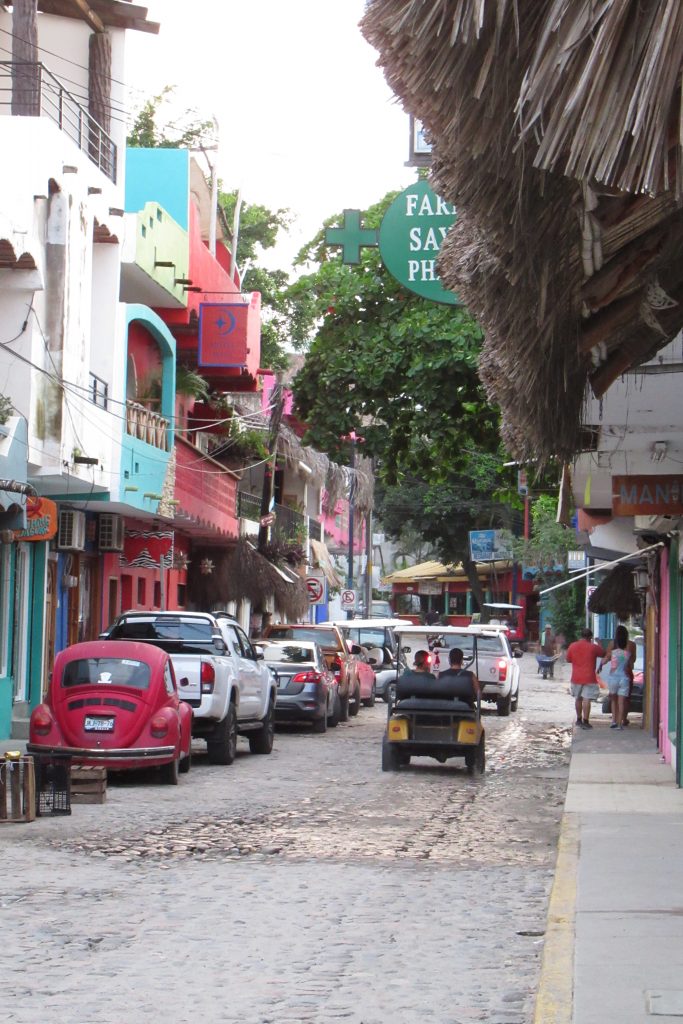
Bright and beautiful downtown Sayulita.Sayulita Beach.
Besides that life is ‘normal’ here. There are tables with umbrellas in the sand. Surfers in the water. Vendors selling hats, dresses, sunglasses, toys, sculptures, jewelry, cuban cigars, massages and hair braiding. We got a couple one hour massages for $20 US that were excellent. The sun is hot, humidity high and water is warm. Bath tub warm but I really enjoy it. I can stay in for a long time just bobbing up and down watching the pelicans and frigates fly over head and crash into the water to catch fish. It’s very soothing to let my gaze wander over the brightly colored umbrellas dotting the dark sand with the palapa roofed restaurants and hotels behind them. Colorful spanish styled villas with arched windows climb the surrounding hills.
A fisherman shares the spoils with the sea birds at the south end of Sayulita Beach.
At the south end of the beach the fishing boats lay in the sand. It’s fun to watch the gulls, frigates and blackbirds swoop down to snatch up discarded fish carcasses in a churning circle that almost seems choreographed. The fishermen use their trucks to pull the boats to the waters edge as well as pull them out.
Playa los Muertos.
Playa los Muertos is a smaller beach just a short walk south of Sayulita. You can either walk around the rocky point or take the road that first winds around some fancy rental homes and then through a colorful cemetery.
Los Muertos Cemetery.Playa Carricitos.
A longer hike (about 30-40 minutes) up some hills and through the jungle takes you to secluded Playa Carricitos. With hardly another soul in sight this beach is a quiet get away from the main Sayulita Beach. Along the way you’ll see skinks on the ground, parrots in the trees, and hear hundreds of tropical birds that are hidden in the deep foliage. Palm trees, strangler figs, tamarind and the giant parota tree are just a few of the species competing for sunlight.
An iguana suns itself at Playa Carricitos.
Downtown is hopping at night with drum circles and fire dancers in the streets, break dancers in the square, and the general hub bub of tourists driving golf carts and children and dogs running about.
The view from Aaleyah’s, Sayulita. Best drinks and chile rellenos in town. Also, they treat you like a local. Delicious tacos and toppings at El Itacate.
We enjoyed a relaxing two weeks in this bohemian surf town with not much to do but surf, drink, shop and eat. The nightlife was entertaining, but we really enjoyed sitting in our patio furniture and listening to everything going on in town. There was modern DJ music, Mexican music, families singing, drum circles drumming, lightning flashing and occasionally….thunder booming. We’ll be back!
Our first view of Luxor was from above from a hot air balloon. We woke before dawn, were shuttled ashore from our ship and then took a short van ride to the area where dozens of hot air balloons were in different stages of filling up and lifting into the dark morning sky. The roar of flames greeted us as the van door slid open and our pupils dilated at the sight of giant rainbow colored canvases laying in prone position with jets of flame shooting into them like angry dragons defending their loot. The noise was deafening and it was a bit chaotic as we were led to our balloon that had a multi-basket which fit 32 people!
Hot air balloons filling up in Luxor.
It was very peaceful once we were airborne. Soon the sun crested the horizon and light illuminated the land below with its distinct line between lush green farmland and the tan sandy desert of the Valley of Kings and Valley of the Queens.
Sunrise over Luxor via hot air balloon. Another method of travel in Egypt, the humble donkey in a field where our balloon landed.
After our thrilling ride we returned to our ship for breakfast followed by a trip to Luxor Museum (with some mummies!) and then the grand Luxor Temple.
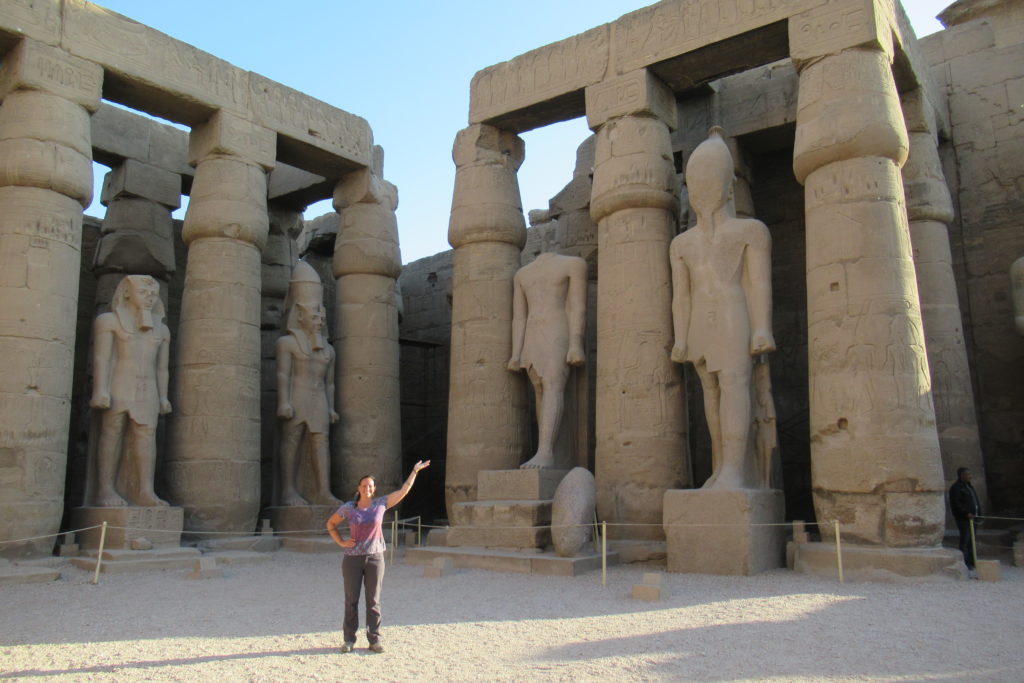
Inside Luxor Temple
The next day was full of famous stops as we visited The Valley of the Kings and The Valley of the Queens. The hieroglyphs inside The Valley of the Kings were the best preserved we had seen. The astonishing colors have remained for 3,400 years!!!
The colors are amazing considering their age!The sarcophagus inside the Tomb of Ramses IV.Each tomb in the Valley of the Kings has a detailed map at the entrance. The sarcophagus inside the tomb of King Tut Ankh Amun (reign 1333-1323 B.C.). His mummy is there for viewing in another chamber too! Beautifully preserved hieroglyphs are seen inside the tombs in The Valley of the Kings. Valley of the QueensHatshepsut Temple – Valley of the Queens
If you want to see King Tut’s tomb it’s a small extra fee which I felt was well worth it. TRAVEL TIP: there is no photography in some of the tombs except for cell phones. Hence my somewhat blurry photos taken inside. Throughout the tour there was sometimes a fee (up to $20 US, depending on the site) to bring in professional cameras.
The next day we visited Karnak Temple which is the biggest temple in the world and took about 1,800 years to build. It’s actually closer to a small city with temples, sanctuaries, chapels and other buildings. It was humbling to walk through the famous Hypostyle Hall with it’s 134 columns in 16 rows, covering 50,000 square feet.
Karnak TempleYou can see how huge the columns are by comparing them with the people in the distance. The Sacred Lake of Karnak Temple.
Here’s a picture of how the ships on the Nile tie up to each other over night. We would actually walk through the lobbies of other ships to get to the shore.
Ships tied up to each other in Luxor.
We had an excellent time in Luxor and were a little sad to say goodbye to our ship early the next morning for a flight back to Cairo.
Watching the palm trees in their dreamy dance along the banks of the Nile, I wave at a small boat carrying two Egyptians and a cargo of reeds. The sky is periwinkle, the Nile is aegean blue. The panoramic window in my cabin shows a gentle, ancient story as we pass by donkeys pulling carts, cows grazing on tiny islands and the dusty Sahara rising up as a backdrop. As you may or may not know, my parents generously give us the gift of travel and this year we ended our personal Latin American trip when we flew from Rio to Cairo to meet up with the family. Now we began “Egypt and The Eternal Nile” tour with MIT Alumni Travel and Odysseys Unlimited.
The entrance to the Great Pyramid is behind the man in white. You can see how large the blocks are that make up the pyramid.
The Giza Plateau with it’s three famous pyramids was our first stop. We had the amazing opportunity to climb inside The Great Pyramid of Cheops which looms overhead at over 450 feet tall. This ascent was steep, tight, dark and humid. It’s one way in and out with a few stairs but mostly a wooden ramp with metal rungs. You must bend at the waist, ducking your head as you squat-climb upwards towards the tomb room where you can finally uncurl and stand up. The openings are tight and barely fit two people as you must pass people coming down. I admit to feeling a bit claustrophobic at one point as my crouched posture breathed in the musty hot air that we all were sharing and I had a brief thought of how quickly coronavirus could spread in such conditions.
At the top of the climb and a final duck into the large chamber my fears evaporated as I stared in awe at the black sarcophagus. The room was about 20 feet wide by 40 feet long. A sheet of paper wouldn’t fit between the seams of the colossal stones that made up the walls, ceiling and floor. I slid my hand inside the smooth open sarcophagus and tried to feel the 4,500 years that had passed since its maker’s hands had polished it.
View from the back of a camel.
The next adventure was riding a camel to the third pyramid of Mekrenas. Probably the most exciting part of any camel ride is getting on and getting off. Camels are tall and they kneel down with their front legs first followed by the back legs. The rider climbs aboard the wooden saddle and grabs the horn with both hands as the camel lurches up, back legs first. If you’re not holding on you could pitch off over its head!
The Great Sphinx of Giza.Abu Simbel. Check out the size of the ear next to the right of Ian!
Next up was an early flight to Aswan followed by 3 1/2 hours across the Sahara on a bus to board our first ship. We would stay on the Omar el Khayam for 3 days as we cruised Lake Nasser and saw numerous temples. The amazing temple of Abu Simbel which was built for Ramses II portrays him as a God and provides evidence when the sun rises on his statue (along with 3 other gods) twice a year on Feb 22 and Oct 22. The temple was built so that the sun rays pass along the corridor and land on the 3 Holy of Holies (Ra, Ramses II and Amun). The 4th god in this room, Ptah, is the god of fertility and darkness, who works at night, so he remains in shadow.
Ramses II is second from the right. Abu Simbel on the far left. Ramses II had a temple built for Queen Nefertari on the right.
We enjoyed many forays to visit temples along the shore of Lake Nasser including the Valley of the Lions, which is 3,150 years old.
Disembarking from the ship to explore temples along the shore. Close up of one of the sphinx in Valley of the Lions. Valley of the Lions
After three days of cruising Lake Nasser we disembarked in Aswan where the Aswan High Dam is located that created Lake Nasser by damming up the Nile. One of the fascinating consequences of this dam was the international collaboration that happened to preserve the temples and tombs that would have been submerged by the rising water levels.
Our captain enjoyed racing the other feluccas as we sailed.
After visiting more temples we embarked on the next ship of our journey that would take us up the Nile. To begin this part of our journey we enjoyed an adventurous sail on a traditional Egyptian Felucca. The adventurous part was in the beginning when our boat was trapped against the shore and played bumper boats with all the other boats including the aft end of our ship. The captains didn’t seem to care who crashed into what, and we all agreed that the techniques for getting the boats moved were the same techniques used for driving cars in Cairo.
That evening our ship The Amwaj passed through the Esna lock. Our ship waited about 15 minutes in the lock as the water drained out of the lock and we were bombarded by hawkers both on the concrete lock and in tiny boats. They threw up items like scarfs and galabeyas in plastic bags for us to buy. Sometimes the bags even landed in the pool on the ship! Once a price was agreed upon they sent another plastic bag up and we placed the payment inside and threw it back. It was quite hilarious with all the shouting and bag tossing.
The hawkers eagerly await the ships as they head into the lock. Hawkers in tiny boats brave the tight space in Esna Lock.
Good night and good bye Lake Nasser! Up next: Luxor, Valley of the Kings and King Tut!
Iguazu Falls, one of the largest waterfalls in the world.Iguazu Falls share the border between Brazil and Argentina.
We decided to stay in the town of Foz do Iguazu in order to have more restaurant choices. However, the airport, Iguazu Falls Park, and the Argentina border are all at least a 30 minute (very hot and humid, sometimes super crowded) bus ride away from the town. Travel Tip: pay the extra money to stay at a hotel or resort with its own restaurant closer to the park. It’s worth it in time, headache and hassle and Foz do Iguazu doesn’t have much character.
A platform suspends you over the falls for great photos, Brazil side.
Brazil side of Iguazu Falls: great for pictures of The Devil’s Throat, smaller than Argentina side, there’s a boat ride to the bottom of the falls for additional price. Be prepared for stairs, humidity and getting wet from mist. We spent 4 hours and felt like we saw it all (minus the boat ride).
Plush-crested jay, Brazil side of Iguazu Falls.
There are lots of coati (similar to a racoon) who aren’t shy, as well as tropical birds and reptiles in the jungle as you make your way through this incredibly beautiful part of the world.
Coati rests on a branch in Iguazu Falls National Park Argentina.
The next morning we took a cab directly from our hotel in Brazil across the border into Argentina and to our hostel in Puerto Iguazu. After dropping off our backpacks the cab took us to the park. The whole trip cost $30 US and took about an hour and a half. The timing depends on how long the line is crossing the border. At the end of the day it was an easy bus ride from the park back to the town center of Puerto Iguazu.
There are 275 different drops that make up Iguazu Falls.
Argentina side: if you can, plan for most of a day to see this much more extensive park. There’s a train that stops at the two biggest trails for waterfalls (ticket included with price of admission), optional boat trips to the bottom of the falls and another trip along the river, and more extensive trails. You’ll see the top of The Devil’s Throat as well as many other waterfalls along well marked trails.
Iguazu Falls Argentina side.
We spent six hours at the park without doing any boat rides and just seeing the major sights. While most of the trails are flat, some do have stairs. We got a little wet from mist and there are freshwater showers at a couple spots where you can get drenched if you want. I wore a bathing suit under a sundress and got my hair wet as a natural air conditioner.
On the boardwalk to see The Devil’s Throat from above, Argentina side.
We were very glad to have the chance to see both sides of these breathtaking falls. This should be on everyone’s Bucket List!